





Division 296 Superannuation Tax Explained: Common Myths Debunked
While the Division 296 tax is still yet to be legislated, it’s looking increasingly likely the tax will be introduced. For individuals who may be impacted by the change, it’s critical to understand how different scenarios might play out and what they should consider.
What is Division 296 Tax?
Division 296 is a proposed new tax measure targeting superannuation balances above $3 million. Unlike Division 293, which applies to concessional contributions, Division 296 is a tax on unrealised gains within superannuation.
This means that if your super fund assets grow in value—even if you haven’t sold them—you may still be subject to additional tax on the growth above the $3 million threshold.
Division 296 vs Division 293: What’s the Difference?
- Division 293: Additional 15% tax on concessional contributions (salary sacrifice or employer contributions) for high-income earners.
- Division 296: Up to 15% tax on earnings (realised and unrealised) associated with super balances above $3 million.
Division 293 vs Division 296: Key Differences

Understanding this distinction is critical to avoid confusion.
Common Myths About Division 296
Myth 1: “I’ll have to pay tax on all unrealised gains from the past”
Reality: Division 296 will not tax your entire historical gains. The tax is proposed to be based on prospective movements in your superannuation balance year to year, starting from the implementation date. It isn’t a retrospective tax on everything you’ve earned in the past — rather, it only applies to changes in value after the new rules come into effect.
Myth 2: “I’ll be paying Capital Gains Tax (“CGT”) in addition to Division 296 tax”
Reality: This is a common misconception. Division 296 is not a separate layer of capital gains tax (CGT) applied on top of what already exists. Instead, it’s a separate mechanism where the ATO will calculate a notional gain (or loss) on your super balance each year and apply an additional 15% tax if you are above the $3 million threshold. You won’t be hit with CGT and Division 296 tax on the same gain. The Government has stated Division 296 will be structured to avoid double taxation. For example, if you later sell an asset and pay CGT, adjustments should be made to reflect prior Division 296 payments.
Myth 3: “I should move my assets outside of super”
Reality: Moving assets out of super isn’t always the right answer. Yes, Division 296 may increase your tax burden if your balance exceeds $3 million, but super is still one of the most tax-effective vehicles for wealth building. Earnings on super are taxed at concessional rates (generally 15% on untaxed income or 10% on discounted capital gains), and pension phase accounts remain tax-free up to the transfer balance cap. Before restructuring your assets, it’s critical to weigh up the costs, CGT implications, estate planning considerations, and the long-term advantages of super.
Restructuring—such as pulling money out of super—may create CGT or stamp duty issues, and reduce super’s tax concessions. Careful planning is required before making big changes.
Myth 4: “Division 296 tax is payable immediately once my balance exceeds $3 million”
Reality: The tax is not triggered simply by crossing the threshold. It applies only to the increase in value of your super balance above $3 million. The $3 million limit also applies for each individual member of the fund, so there are opportunities to recalibrate the composition of member funds to mitigate the potential impact of the tax burden whilst addressing broader estate and/or succession plans. Strategies involving pensions and recontributions, for example, are worthwhile planning and implementation tools to consider with the prospective tax.
Myth 5: “Planning for Division 296 should focus on an assessment of my unrealised capital gains on assets within my superfund where my balance exceeds $3M”
Reality: No. Division 296 imposes a 15% tax on earnings linked to super balances over $3 million. It’s not just about unrealised gains—the tax is based on the change in your total super balance, including realised income. This means even if you haven’t sold assets, you could still owe tax. For funds with illiquid assets, this can create real cashflow pressure, as the tax must be paid regardless of whether the income is in cash. Cashflow is a critical focus when assessing the strategic impact of Division 296 on your fund.
FAQs About Division 296
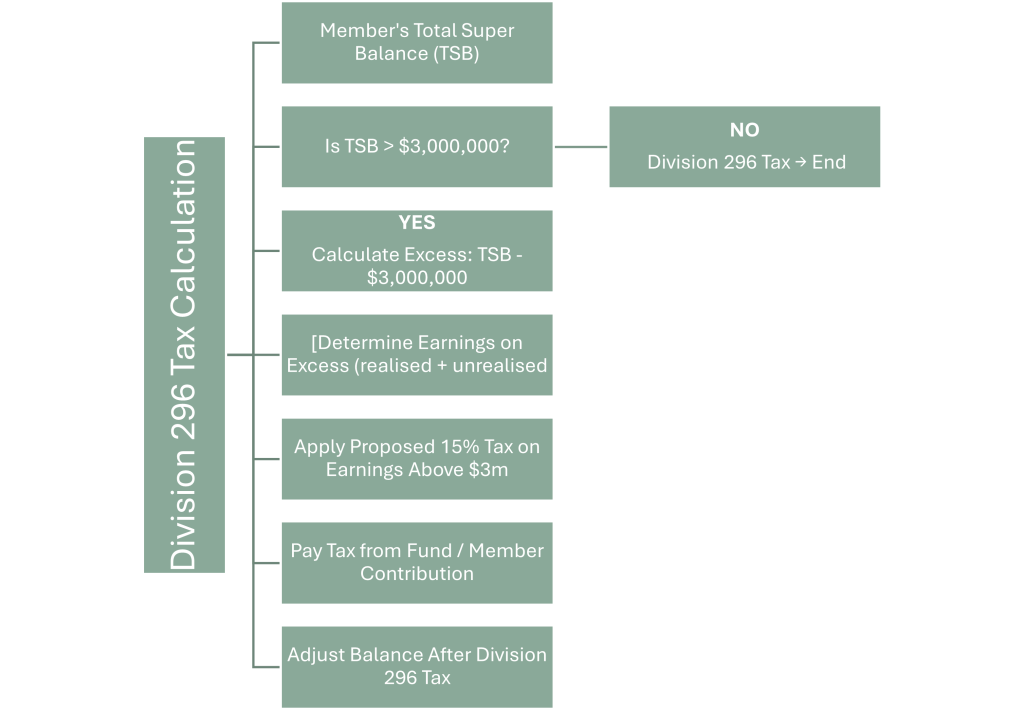
How do I calculate Division 296?
When will Division 296 apply?
The proposed start date for Division 296 was 1 July 2025. While the legislation has not yet been finalised, it is expected to be introduced from this date. This means individuals with superannuation balances over $3 million should start planning now to understand how the rules might affect them and whether any pre-emptive strategies should be considered.
How much is the Division 296 tax rate?
It is proposed as up to 15% on earnings attributable to balances above $3 million, on top of the existing 15% tax rate.
Will Division 296 replace existing super taxes?
No, it will apply in addition to existing superannuation tax rules.
Final Thoughts: Stay Informed
While Division 296 is not yet legislated, the proposed framework suggests it will fundamentally change how large superannuation balances are taxed.
Key takeaways:
-
It applies from 1 July 2025 (subject to legislation).
-
It impacts unrealised gains and total balance movements, not just realised income.
-
Planning strategies should focus on cashflow, structuring, and estate implications—not knee-jerk withdrawals from super.
Legislative disclaimer: The details of Division 296 are subject to change until legislation is passed. Anyone potentially affected should seek professional advice and monitor updates from Treasury and the ATO.